
Invited Talks
 Ian Horrocks, Oxford University, UK
OWL: a Reasonable Ontology Language? Tuesday, 17th August, 2010, 18h30 (3.2.14) |

|
|
The design of OWL was heavily influenced by
description logics. One motivation for this was
to enable the use of description logic inspired
reasoning systems in OWL applications. In the
more than six years since the publication of the
standard, OWL has become a mainstream
technology that is supported by major technology
vendors and has been deployed in a wide
range of applications. In this talk I will review
our experience with OWL, consider the extent
to which it has satisfied application requirements,
and in particular examine both the usefulness
and feasibility of OWL reasoning in practice.
Short Bio Ian Horrocks is a Professor in the Oxford University Computing Laboratory where he jointly (with Georg Gottlob) leads the Information Systems Group. His research interests include description logics, ontology languages, and reasoning systems. He was centrally involved in the development of the OIL, DAML+OIL and OWL ontology languages, and was co-chair of the W3C Working Group that recently developed OWL 2. He also developed algorithms and implementation techniques that are employed in many reasoning systems. He has published more than 150 articles in conferences, journals and books. He is a BCS Fellow, an ECCAI Fellow, an EPSRC Senior Research Fellow and a past winner of the BCS Roger Needham award. |
|
|
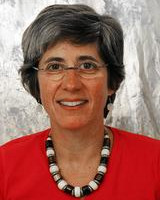
Manuela Veloso, CMU, USA Autonomous Mobile Robots Coexisting with Humans in Indoor Environments Wednesday, 18th August, 2010, 9h00 (3.2.14) |
|
|
We envision ubiquitous autonomous mobile robots
that can help and coexist with humans. Such
robots are still far from common, as our environments
offer great challenges to robust robot
perception, cognition, and action. We realize the
envisioned robot and human coexistance as offering
a symbiotic human-robot interaction, such
that we view robots and humans with complementary
limitations and expertise. I will present
CoBot, our visitor's companion robot that can
provide guidance to visitors unfamiliar with the
building, while it can also identify and overcome
its limitations by asking for human help. I will
present CoBot's effective mobile robot indoor
localization and navigation algorithms that use a
WiFi signature perceptual map
combined with geometric
constraints of the building.
I will illustrate CoBot's
performance with examples
of a few autonomous
hours-long
past runs of the robot
in Wean Hall and very
recent runs in the new
Gates Hillman Center.
I will then discuss the
opportunities and tradeoffs
raised by the symbiotic human-
robot interaction, and present
illustrative studies. I conclude with the presentation
of our second CoBot robot and the presentation
of our ongoing work towards having multiple
robots and humans engaged in planning and
coordination for a variety of tasks.
Short Bio Manuela M. Veloso is Herbert A. Simon Professor of Computer Science at Carnegie Mellon University. She directs the CORA L research laboratory, for the study of agents that Collaborate, Observe, Reason, Act, and Learn, www.cs.cmu.edu/~coral. Professor Veloso is a Fellow of the Association for the Advancement of Artificial Intelligence, and the President of the RoboCup Federation. She recently received the 2009 ACM/SIGART Autonomous Agents Research Award for her contributions to agents in uncertain and dynamic environments, including distributed robot localization and world modeling, strategy selection in multiagent systems in the presence of adversaries, and robot learning from demonstration. Professor Veloso is the author of one book on “Planning by Analogical Reasoning” and editor of several other books. She is also an author in over 200 journal articles and conference papers. |
|
|
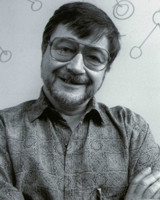
Judea Pearl, UCLA, USA The Logic of Causes and Counterfactuals Thursday, 19th August, 2010, 9h00 (3.2.14) |
|
|
I will present a few basic principles and simple
mathematical tools that are sufficient for solving
most (if not all) problems involving causal
and counterfactual relationships. The principles
are based on non-parametric structural equation
models, a natural generalization of those
used by econometricians in the 1950-60s, yet
cast in new mathematical underpinnings. This
semantical framework, enriched with a few
ideas from logic and graph theory, gives rise to
a formal yet friendly calculus of counterfactuals
that unifies all existing approaches to causation
and resolves long-standing problems in several
of the sciences. These include questions
of confounding, causal effect estimation, policy
analysis, legal responsibility, retrospective
analysis, effect decomposition (mediation), instrumental
variables, and the
integration of data from
diverse studies.
Reference: J. Pearl,
Causality (Cambridge
University Press, 2nd
ed. 2009)
http://bayes.cs.ucla.
edu/jp_home.html
http://bayes.cs.ucla.
edu/IJCAI 99
http://ftp.cs.ucla.edu/
pub/stat_ser/r350.pdf
Short Bio Judea Pearl is a professor of computer science and statistics at the University of California, Los Angeles. He is a graduate of the Technion, Israel Institute of Technology, and has joined the faculty of UCLA in 1970, where he currently directs the Cognitive Systems Laboratory and conducts research in artificial intelligence, causal inference and philosophy of science. He has authored three books: Heuristics (1984), Probabilistic Reasoning (1988), and Causality (2000). A member of the National Academy of Engineering, and a Founding Fellow the American Association for Artificial Intelligence (AAAI ), Judea Pearl is the recipient of the IJCAI Research Excellence Award for 1999, the London School of Economics Lakatos Award for 2001 and the ACM Alan Newell Award for 2004. In 2008, he received the Benjamin Franklin Medal for Computer and Cognitive Science from the Franklin Institute. |
|
|
Christos Papadimitriou, UC Berkeley, USA Computing Nash equilibria: The plot thickens Friday, 20th August, 2010, 9h00 (3.2.14) |

|
|
Roger Myerson argued in 1999 that the Nash
equilibrium lies at the foundations of modern
economic thought. Seven years later, it was
proven (by Daskalakis, Goldberg, and the
speaker) that the concept's universality, famously
established by Nash in 1950, is problematic,
in that the problem of finding a Nash
equilibrium is computationally intractable. Since
then many more aspects of Nash equilibria in
games and markets have been explored from
the complexity standpoint, and the dark computational
side of the concept keeps getting
gloomier. We review several recent results
establishing that playing repeated games, or
playing games under considerations
of risk, or disambiguating
games via equilibrium selection
a`-la Harsanyi-
Selten, or computing
equilibria by the homotopy
method, are
all rife with more and
more serious complexity
impediments.
Short Bio Christos H. Papadimitriou is C. Lester Hogan Professor of Computer Science at UC Berkeley. Before joining Berkeley in 1996 he taught at Harvard, MIT , Athens Polytechnic, Stanford, and UCSD. He has written five textbooks and many research articles on algorithms and complexity, and their applications to optimization, databases, AI , economics, and the Internet. He holds a PhD from Princeton, and honorary doctorates from ETH (Zurich), the University of Macedonia, the University of Athens, and the University of Cyprus. He is a member of the American Academy of Arts and Sciences and of the National Academy of Engineering, and the National Academy of Sciences of the USA, and a fellow of the ACM. His novel Turing was published by MIT Press in 2003, and his graphic novel Logicomix (with Apostolos Doxiadis) by Bloomsbury in 2008. |
|
© 2010 Faculdade de Ciências da Universidade de Lisboa.